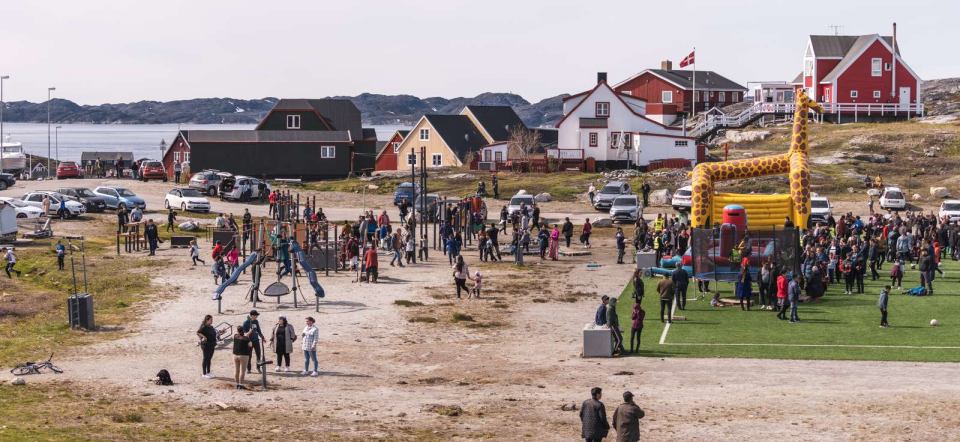
We had barely entered the new year when the eyes of the world were once again on Greenland. The recent geopolitical tensions between Greenland and Denmark on the one hand and the United States on the other have turned the world order we know upside down.
Trump's desire to "take over" Greenland has shaken the Greenlandic population and awakened memories from the colonial era, says Arnarak Patricia Bloch.
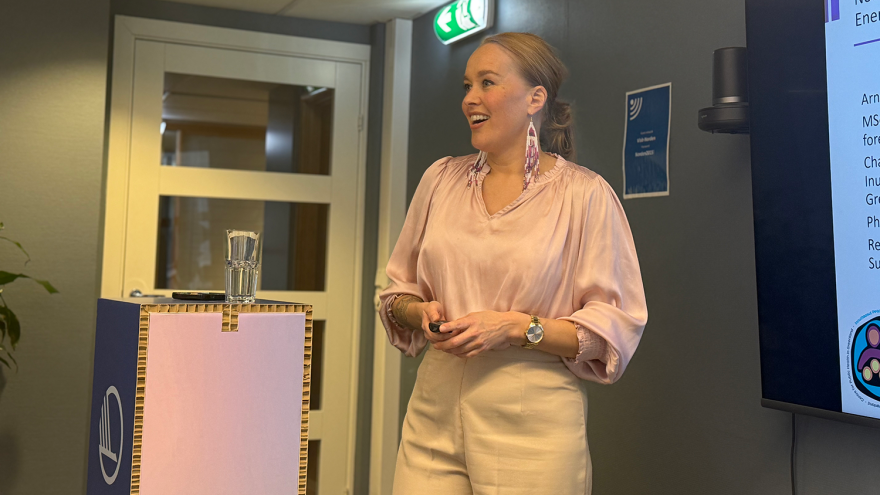
She grew up in Greenland and is the daughter of a Greenlandic mother and Danish father. She is now researching suicide prevention in Greenland and participating in a NordForsk-funded network on indigenous peoples.
She visited the Nordic Center in Oslo to share her experience of the geopolitical situation in Greenland.
"I find the current situation in Greenland quite overwhelming, but also positive in many ways, because we have received a lot of attention about what Greenland is and its people," says Arnarak Patricia Bloch.
Memories from the colonial era
To understand why Trump's threats have affected and frightened the Greenlandic population, one has to understand the colonial past.
"We have a history as a colonial nation that means that we are extra affected when another country suddenly wants to claim us in the way that Trump says he wants. They forget that we are human beings and a people and not just a property you can take. When Trump repeated his threats at Christmas, we were afraid that decisions would again be made over our heads," says Arnarak.
She refers to the fact that Greenland has throughout history experienced that decisions have been made by Denmark without the Greenlanders being involved. But that has changed now:
"The threats from the United States during Trump's first term came so suddenly, and we had no crisis plan ready to deal with them. Now we have learned that we are allowed to make demands and that we get a voice, even though Greenlanders have traditionally been reluctant and not so prominent. It has also been good to be confirmed that we have good co-operation between the Nordic countries and Europe. It shows that something good has actually come out of the crisis between the United States and Greenland."
Arnarak Patricia Bloch
- PhD student at the University of Greenland, Ilisimatusarfik, and at the Centre for Public Health in Greenland at the University of Southern Denmark.
- She is researching protective factors against suicidal behaviour among Greenlandic young people. She has held suicide prevention courses for 1,000 frontline people in Greenland who work with people on a daily basis. In addition to the frontline people, she has established the settlement project, which intends to include citizens' perspectives and suggestions for solutions to suicide prevention work in Greenland. So far, 30 out of 60 settlements have been included, and the remaining settlements are planned to be visited during 2026.
- Steering committee chairwoman for Inuit Health under the Inuit Circumpolar Council.
- Lives in Tønsberg, Norway.