
Nordic researchers are investigating how legislation and policy can keep pace with these developments and how they can be adapted to safeguard both biodiversity and Sámi rights.
The project Adapting Law for Moving Targets: Climate Change, Overtourism and Biodiversity in Indigenous Arctic National Parks (ALAMOT) focuses on tourism in Arctic national parks, specifically in Finland, Sweden and Norway. These areas were established to protect nature, but they are just as exposed to climate change as other parts of the Arctic, while growing numbers of tourists are seeking experiences in the national parks' unspoilt natural environments.
Project leader Minna Pappila from the Finnish Environment Institute (Syke) believes there is still time to act before overtourism becomes unmanageable:
“Overtourism is a growing problem, and in some places it is already very real. But I think that in Finland, and probably also in Norway and Sweden, we still have time to act.”
The researchers are studying national parks in different parts of Sápmi, the Sámi homeland stretching from Norway through Sweden and Finland to Russia.
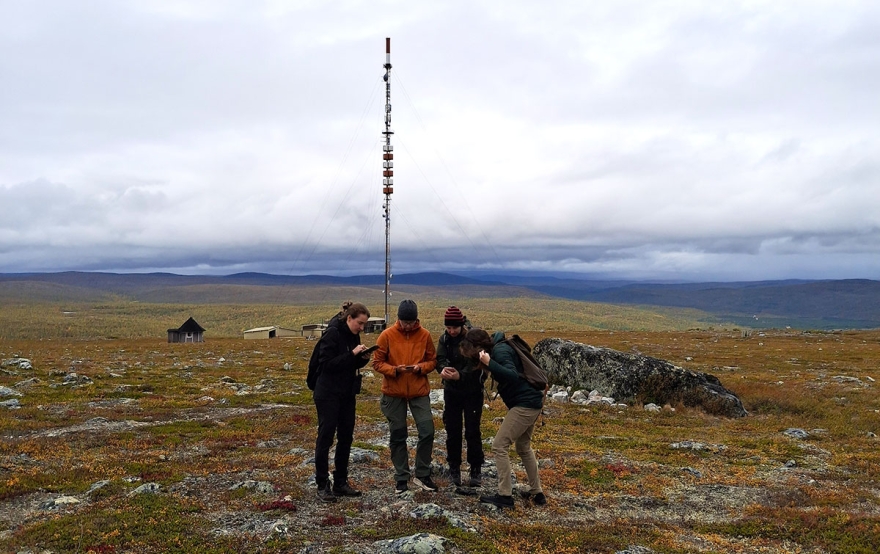
Researchers from the ALAMOT project during one of their visits to the wilderness areas in Utsjoki in Northern Finland. (Photo: ALAMOT)
Many small impacts add up
An important finding is that tourism rarely operates in isolation. Reindeer husbandry, forestry, mining, and other infrastructure development take place in the same landscapes, while climate change is altering the fundamental ecological conditions.
Project coordinator Aino Lipsanen, also at Syke, says these are areas where governance is often inadequate:
“One governance shortcoming that we have already found is the handling of the cumulative effects of different kinds of land use, where tourism is only one part. Finnish legislation is intended to safeguard Sámi culture, but when it comes to assessing these accumulated negative impacts, there is a clear weakness: essentially, no one is doing it.”
The project brings together biology, law, tourism research and other social sciences. The researchers are looking at what legislation says and what happens when that legislation is implemented in remote Arctic areas.
This is a distinction that matters. According to the researchers, existing rules have little effect if they are not communicated, implemented and enforced. Through their workshops with Sámi participants, the researchers have found that tourists and tourism businesses do not always know enough about Sámi rights and livelihoods, or about the potential consequences of their own activities.
Collaboration with Sámi communities
A central part of ALAMOT is to involve Sámi rights-holders and local communities directly in the research. Scientific methods are combined with interviews, workshops and the knowledge of local residents. Indigenous people are recognised as holders of knowledge and experience that can improve understanding of how legislation and policies work in practice.
For Minna Pappila, protecting Sámi culture is closely connected to protecting Arctic ecosystems:
“A general starting point for us is that the rights of the Sámi people, and Indigenous peoples' rights in general, are protected under both international and national law, including through the constitution and other national legislation. But personally, I believe that when we protect Sámi culture, we are protecting nature at the same time. The two are connected.”
The project has developed specific ethical guidelines for its work with Sámi people and seeks Free, Prior and Informed Consent from participating communities. One aim of the collaboration is to develop recommendations that the researchers can take forward.
Aino Lipsanen emphasises that the relationship with the communities will continue throughout the project:
“We did a lot of preparatory work before proposing these gatherings. We talked to the communities about whether they would be interested in participating and what time of year would work best for them.”
Lipsanen says that, over the course of a week, they held workshops and interviews with almost 30 people from different villages. The researchers also made field visits to gain a better understanding of the ecological conditions in the different areas.
“For us, it is important that this should not be one of those projects where we simply turn up, extract information and then never show up again. With each community, we discussed how we would continue the collaboration and how we would give the knowledge from the project back in a way that is useful to the communities,” Lipsanen explains.
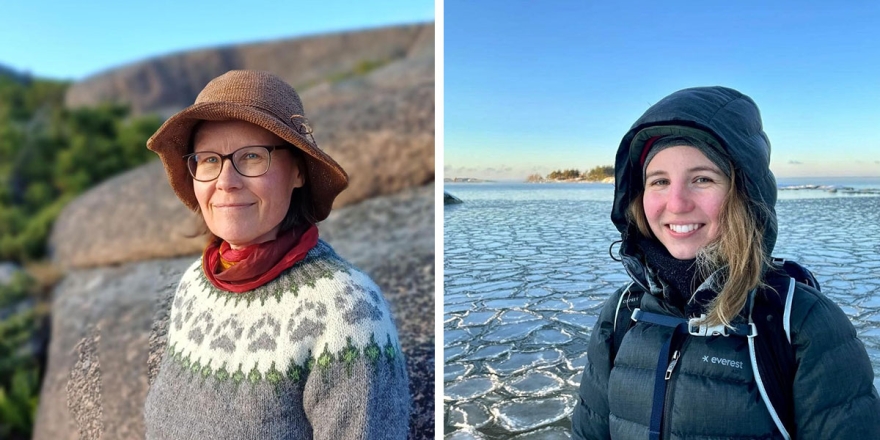
Minna Pappila and Aino Lipsanen are working with Sámi communities to understand how tourism and land use affect nature, rights and livelihoods.
From reactive to proactive policymaking
ALAMOT is still at an early stage, and the researchers are cautious about making recommendations before completing their comparisons and discussing possible solutions with Sámi communities and other stakeholders. But the project has a clear practical aim: to translate knowledge about biodiversity, tourism and climate change into better regulation and policies.
Minna Pappila hopes this can help public authorities anticipate change rather than reacting only after problems have emerged:
“I hope this project can help improve the rules governing tourism in national parks and wilderness areas. The legislation seems somewhat reactive rather than proactive, and I hope the cumulative impacts of different activities can be better taken into account. In tourism, there are many small things that together can have very negative consequences,” Pappila says.
Better tourism in the Arctic is also about helping visitors understand where they are and whose land they are visiting:
“I don't know whether we can change this or do very much about it. Ultimately, it depends on legislators and how the authorities assess our proposals. But I would also like tourists to better understand that they are coming as guests to the Sámi homeland, and that they should behave respectfully while they are there,” Pappila says.