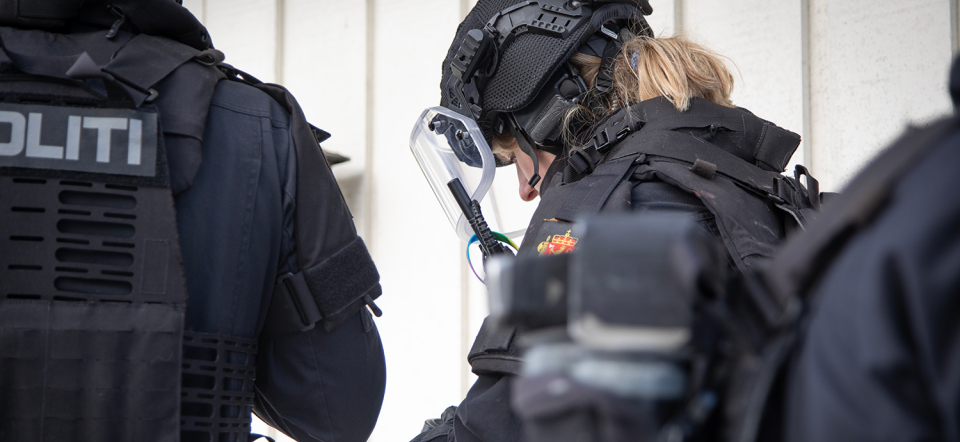
"When women choose to leave this service [...] well, they have usually shown that they are too weak in terms of physical strength, shooting and tactics.”
This statement comes from a senior manager in the emergency response unit (UEH) in the West Police District in Norway and is published in the book Arbeidskulturer og kjønn i det operative politiet: En studie som rotet opp i feltet.
Why are there so few female police officers in the emergency response service?
This is a question posed by the two authors of the recently published book, written by Ulla-Britt Lilleaas, professor at the University of Agder, and Dag Ellingsen, professor at the Police University College in Oslo.
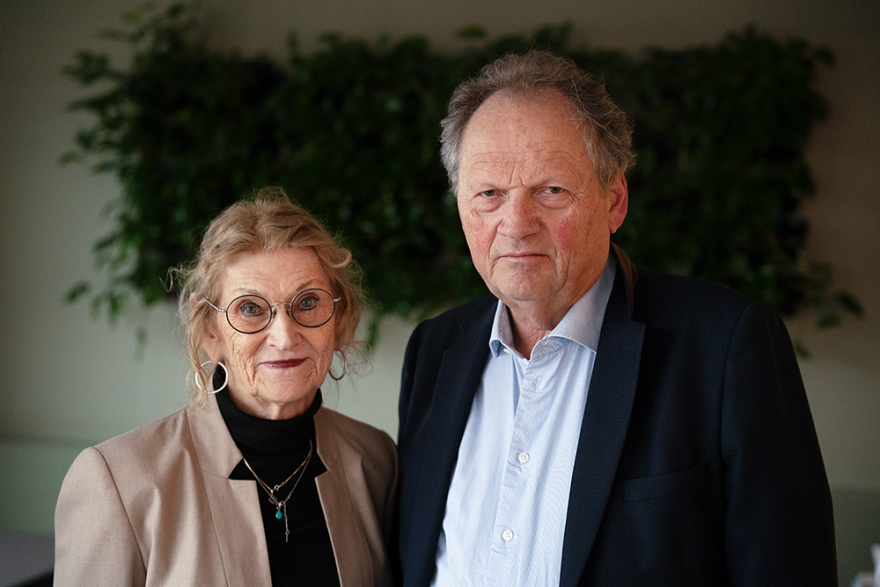
"It is important that we keep track of what the police do, because they have the broadest powers in our society. It is not just a question of morality and amorality, but also of the fact that it is a profession where colleagues depend on each other's trust. They should lead by example and be role models as an executive force."
Using extensive material and institutional ethnography as a method, the researchers have collected various statements and narratives about women. They have investigated why women are considered less valuable in operational work than physically strong and tough men.
Tough culture and pronounced hierarchy
The researchers conducted a field study at the emergency response unit in the West Police District in Norway and encountered many surprises along the way.
"We discovered that as a woman, there was a steep uphill battle to be accepted, and it was clear that the training facilities were not designed for women. The training programmes were aimed at men, and we also heard stories about 'boys clubs' that ruled the place. It is important to note that the management was against this, but they said they had no more tools in their toolbox. In a way, they had given up," says Ulla-Britt Lilleaas, and Dag Ellingsen adds:
"We met very few men who had anything positive to say about women. There is a hierarchy where the bar has been set so high that many cannot meet the requirements. More and more women are being recruited into the police force, but they quickly disappear again. Many believe it is a combination of a lack of physical strength and interest. Women themselves say they would very much like to compete with the men, but they were constantly held back by them. We discovered what we call a culture of endurance. A kind of test of whether you can function on the street.
Both researchers say that they have documented many things that are actually invisible. A research interview can be a socially difficult situation where you have to get people to talk, and it can take time before people show trust and are willing to talk about uncomfortable things.
If you speak up, you'll be called a redstocking
The study is the first of its kind in the Nordic region, and although there are no similar studies in the other Nordic countries, researchers believe it is realistic to assume that conditions for women in the police force are similar to those in Norway.
"There is added value for the Nordic region in that we have shed light on something that has been largely unexplored. Perhaps other Nordic countries will initiate similar studies. This is about cultural change and the fact that the toxic culture is deeply rooted in the police force. We are not saying that everyone holds these views, but there is a prevailing culture of silence. How do we get people in the police force to speak up? When the proportion of women is as small as we have seen, it is certainly not easy. If you are a woman and try to report something, you are simply labelled a redstocking. No one will respect you anymore."
The authors of the book have previously participated in a NordForsk-funded project revealed widespread harassment in the Norwegian police and army.