
Inflammatory bowel disease (IBD) is a chronic disease characterised by inflammation of the gastrointestinal tract, causing symptoms such as diarrhoea, abdominal pain, fatigue and blood in the stool. The Nordic region is one of the regions in the world with the highest incidence of IBD.
Crohns disease and ulcerative colitis are the most common forms of IBD. The exact causes of the disease is still unknown, and there is currently no cure, treatments therefore aim to reduce inflammation and ease symptoms. People often fall ill relatively early in life, usually between the ages of 15 and 35. Since they live with the disease for a long time, it can have a strong negative impact on their quality of life, and the costs of medication, operations and hospital stays can become a heavy burden from a health economics perspective.
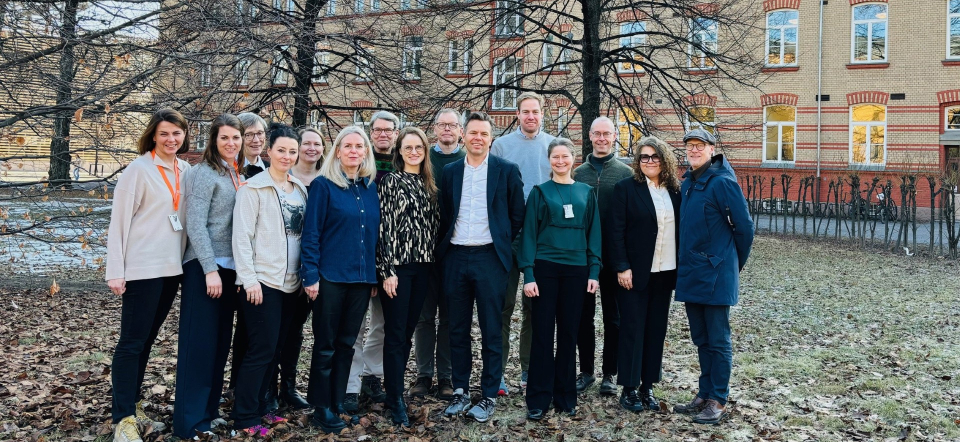
The researchers in the project The Nordic IBD treatment strategy trial (NORDTREAT) are developing the knowledge base on the disease with the goal to enhance life quality for IBD patients.
NORDTREAT is a collaboration between universities, university hospitals and other partners in Sweden, Norway, Denmark and Iceland. A main ambition of the project is to build a platform for research on IBD in the Nordics, according to project leader Jonas Halfvarson, Professor of Gastroenterology at the University of Örebro and consultant at Örebro University Hospital.
“Every Nordic country is small, so we need each other to become relevant actors. It is important to try to develop Nordic co-operation as far as possible. The findings become much more relevant if we can show that what is true for a cohort in one country also matches what you find in another country, he says.
Clinical trial preliminary shows good results
Individuals with IBD can experience symptoms very differently. Some have occasional flare-ups with severe symptoms, while others have symptoms every day. The project is based on a new biosignature, in form of thirteen proteins, found in the blood of people with IBD, which hopefully can provide guidance on the future course of the disease.
“Those who are presumed to develop serious illness should be treated more intensively from day one, while those who only will have occasional flare-ups through life should not be overtreated. Our aim is to be able to verify this biosignature and with it identify a group of people who have a high risk of developing sever illness. We hope to improve the treatment compared to today’s clinical practice and thus improve the outcome for this group,” says Halfvarson.
People recently diagnosed with IBD at 15 hospitals in the four Nordic countries participating in NORDTREAT were offered the opportunity to participate in a clinical trial. Participants were randomly assigned to two groups. In one group, those who, based on the proteins in their blood, were expected to have an increased risk of serious disease received top-down treatment with a so-called anti-TNF medicine from the time of diagnosis. In the other group, patients received treatment according to current clinical practice in the Nordic countries, i.e. a step-up treatment where medication is increased as needed. After one year, the results for those who received top-down treatment were compared with the corresponding group of patients who received treatment according to clinical practice. However, since the study was planned in 2019, clinical practice has advanced, and it is now more common to use anti-TNF drugs early in the course of the disease, as the medications have become significantly less expensive.
“Preliminary analyses show that most people who received the top-down treatment are doing very well after one year. However, the expected effect of our study is less than planned because clinical practice, especially for patients with Crohn's disease, has changed dramatically over the last five years. We are currently analysing the final results of our trial. It is possible that our trial is in practice comparing individuals who received anti-TNF treatment from day one with individuals who did receive the treatment to a large extent, but only later in the course of the disease, i.e. after not responding to other medications,” Halfvarson says.
New findings may support diagnosis
It often takes long time to diagnose IBD, so another part of the project tries to identify new so called diagnostic signatures. In the Nordic countries, a stool test called calprotectin is most commonly used to identify individuals who need further investigation for IBD.
“Submitting a stool sample can feel inconvenient and uncomfortable. Finding a blood test that works just as well to identify potential IBD would be a major step forward,” says Halfvarson.
IBD are often seen as an autoimmune disease, which means that the individual's immune system attacks something in their own body. However, it is only recently that autoantibodies have been identified in IBD, i.e. antibodies against a presumed endogenous substance.
“Our study shows that individuals with ulcerative colitis and individuals without IBD can be distinguished by analysing the presence of autoantibodies in the blood. According to an American study, the autoantibodies can be found in the blood up to ten years before the first symptoms of the disease appear, and our preliminary results align with this. This is therefore more effective than stool samples as a diagnostic marker for ulcerative colitis. This is the first time that something better has been found,” says Jonas Halfvarson.
Read more about the project: NORDTREAT - The Nordic IBD treatment strategy trial - Örebro University

