
This is one of the key questions explored by ROBOWELL, a Nordic research project involving researchers from Norway, Sweden and Denmark, that is investigating the use of robots as welfare technologies and actors in elderly care. A key issue is what happens when machines take over tasks that have traditionally been carried out by humans.
Historically, welfare technology could be understood as a Nordic concept referring to technological solutions introduced within welfare services to support both users and formal and informal caregivers. Some examples of welfare technologies used in elderly care are fall alarms, night surveillance cameras, GPS alarms, mobility aids, or medication dispensers and reminders. Social robots or socially assistive robots are machines designed to perform or assist with social and/or physical tasks.
More recently, with the fast development of artificial intelligence (AI), these robots can also be AI-driven, and can eventually sense, predict, and act, by making decisions by themselves. Using these robots as welfare technologies, but also as actors in elderly care opens for new challenges, but also tensions.
The project aims to develop a proposal for a Nordic model for the integration of such robots in elderly care. The researchers, from the University of Oslo, KTH Royal Institute of Technology, and University of Southern Denmark, seek to address one of the major challenges of our time: an ageing population coupled with a growing shortage of care workers.
Project leader Diana Saplacan Lindblom, a researcher at the University of Oslo and an associate professor at Kristianstad University, emphasises that the question is not whether robots will become part of future care services, but how society can best prepare for their adoption and integration, and where these are appropriate to be integrated:
“We need to prepare for the future and the complexity that lies ahead. We may not yet be surrounded by robots, but developments are moving quickly. The question is how we can ensure that they are introduced in ways that benefit both people and society,” she says.
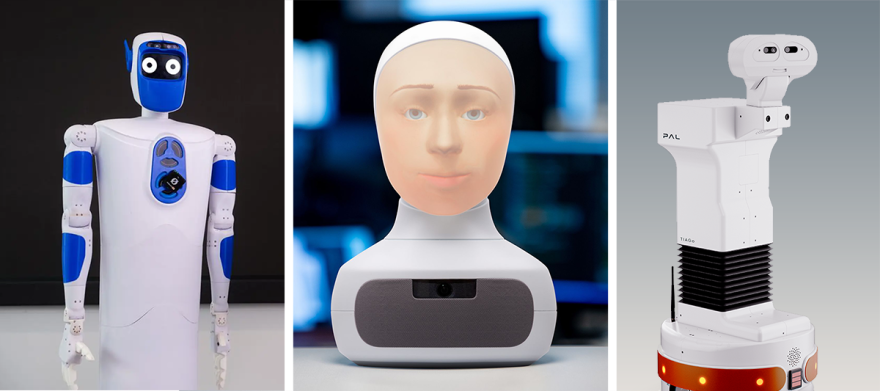
ROBOWELL works with three different robotic platforms operating in distinct areas of application. From left: HospiBot in Denmark, a modular robot developed for logistics and operational support; Furhat in Sweden, a conversational robot; and TIAGo in Norway, a mobile robot capable of performing physical and rehabilitation-related functions.
More than a technology project
Robots add new levels of complexities to welfare technology. Unlike more passive devices, they can move, interact with people and increasingly make decisions based on artificial intelligence. According to Lindblom, finding the right balance between efficiency and human-centred care is essential.
“The challenge is not simply introducing robots. We must decide which tasks, or part of tasks, should be performed by robots and which should remain the responsibility of humans. Robots can clearly assist with logistics, monitoring and practical tasks, and even some basic social functions. However, certain aspects of care require human judgement, relationships and ethical responsibility.”
Demographic change is happening now
Nordic countries are experiencing rapid growth in the number of older people while at the same time facing a shrinking care workforce. Lindblom points out that this imbalance, which is expected to place significant pressure on welfare systems, is no longer just a future scenario.
“For years we have talked about demographic change. But these changes are already taking place, and municipalities are actively exploring how robots can help improve efficiency because they know there will not be enough people to meet future care needs,” says Lindblom.
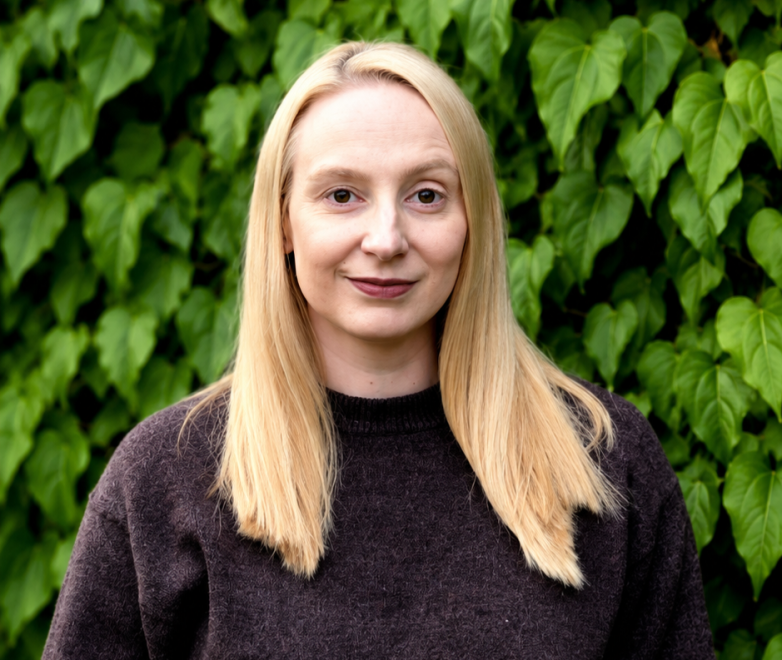
Diana Saplacan Lindblom, project leader of ROBOWELL.
In fact, one could even say that the demographic shift has already taken place: Norwegian authorities announced earlier this year that for the first time in history, there are now more people receiving old-age pensions than there are children receiving child benefits.
This reality is also already reflected in discussions with stakeholders involved in the project. In Norway, elderly care services, rehabilitation centres and municipalities have identified a range of practical tasks that robots could perform. These include everyday functions such as logistics, inventory management, cleaning and indoor transportation of items.
Popular culture has often portrayed robots as highly advanced machines capable of both physical and social interaction. The technological reality, however, is more complex. Different robots possess different capabilities, and most are designed for specialised tasks, as previously indicated. Lindblom notes that users’ expectations are often higher than what current robots can deliver.
“People are often surprised when they meet these robots. They expect something much more advanced. Robots can do many things, but they are often developed and programmed for specific tasks. The laws and regulations also need to be in place before more advanced AI-robots can be adopted and integrated at large scales within elderly care. That is why it is important to identify realistic areas of application where it is feasible for welfare robots to be introduced.”
The project therefore places considerable emphasis on identifying practical scenarios in which robots can provide value, both in the short and the long term.
Photo caption: ROBOWELL works with three different robotic platforms operating in distinct areas of application: TIAGo in Norway, a mobile robot capable of performing physical and rehabilitation-related functions; Furhat in Sweden, a conversational robot; and HospiBot in Denmark, a modular robot developed for logistics and operational support.
A Nordic approach to a shared challenge
Many previous European studies on welfare robots have been confined to individual countries or specific technologies. ROBOWELL takes a broader perspective by combining expertise, experiences, robots and research infrastructures from across the Nordic region. This enables researchers to examine how different types of robots, welfare systems, regulatory frameworks and care traditions influence the adoption of robotic technologies.
“No single country or university has all the answers. The challenges are simply too complex. We need input from researchers, municipalities, healthcare organisations, policy-makers and civil society. Nordic co-operation gives us an opportunity to learn from one another instead of repeating the very same studies in parallel in different countries,” says Lindblom.