How many fish is it safe to catch in the Norwegian Sea to avoid overfishing and maintain healthy fish stocks?
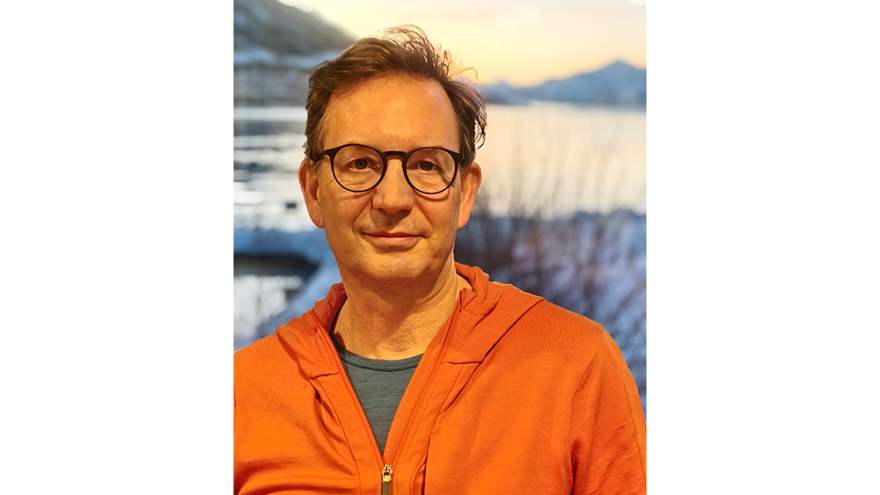
Benjamin Planque from the Institute of Marine Research in Norway is leading the project Enhancing ecosystem assessment and the science-policy interface for sustainable pelagic fisheries in the Norwegian Sea.
"The conventional approach is to look at individual fish species and based on that, decide how many fish we can catch and how many we should leave in the sea. In this project, we go further and look at the entire ecosystem. Fish do not live in isolation, but interact with other fish species, marine mammals, seabirds, deep-sea corals and plankton," he says, continuing:
"If the sea warms up, if we get heat waves, if we have changes in ocean currents, if there is more underwater noise from shipping, all of that can affect the Norwegian Sea ecosystem. That is why it is important to take all these factors into account when assessing how many fish we can catch to avoid overfishing."
The project is part of NordForsk’s focus area on sustainable fishing from healthy seas, initiated by the Nordic Council of Ministers. Fishing is a priority theme in the work to achieve Vision 2030 from the Nordic Council of Ministers.
The project involves researchers from Norway, Iceland and the Faroe Islands. And that is no coincidence. All three countries fish in the Norwegian Sea, and fishing is a major source of income for all three countries. Compared to other European countries, it is fisheries that dominate.
Horizon scanning and ecological forecasts
“An important aspect of assessing the state of the ecosystem is to anticipate upcoming changes. For this, we will perform a systematic exploration of emerging issues, using a method called horizon scanning. This means that we will collect information from a wide range of experts on what can become important in the coming years for the Norwegian Sea. In 2025 we established a structured protocol for horizon scanning, and we are now ready to start collecting information. We are also starting to build prototypes of ecological forecasting models. These models will use climate and other ecosystem information to forecast fish biomass and recruitment few years ahead. One critical step is to evaluate the forecasting performance, that is how good the models are at forecasting, and this is what we are focussing on right now.”
When more results are ready, Benjamin Planque hopes that they will provide new knowledge that will be relevant to decision-makers and the industry. According to him, there is a need for more evidence-based management of the fisheries sector.
How they do it
Several of the project's natural scientists do fieldwork, and many go out to sea to conduct surveys where they monitor fish stocks. There are also observers of marine mammals. An oceanographer measures the temperature and salinity of the sea, and a plankton specialist takes samples of small zooplankton.
The method used by the researchers in the project is data compilation, statistical analysis and ecosystem modelling. In addition, they use narrative storytelling based on collaboration and dialogue with non-scientists or researchers in fields other than natural sciences, as well as with stakeholders from industry and fisheries managers.