When the present seems like one crisis after another, nostalgia easily takes hold. The year 2016 is trending on social media and people are posting throwback pictures, reminiscing about a time when the world felt more stable. This widespread nostalgia allows politicians to use the past as a tool by promising a restoration of the old order.
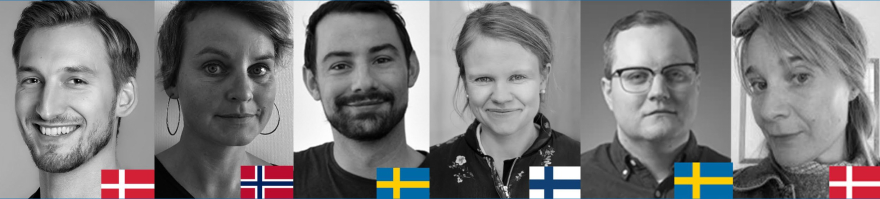
A team of Nordic researchers in the project PastForward: The political uses of the past in digital discourses about Nordic futures led by Associate Professor Manuel Menke from the University of Copenhagen has analysed party programmes and Facebook posts during elections in Norway 2021, Sweden and Denmark 2022, and Finland 2023 to find out how politicians strategically use the past.
“Nostalgia has become a popular political tool and it’s especially common among right-wing parties. They use it repeatedly to claim that the past was better and why everything about the present is problematic. Many of their policies focus on the idea that with certain changes, like reversing multiculturalism and globalisation and removing certain elites from their positions of power, they can bring back a past nirvana,” says Menke.
“Right-wing parties talk a lot about shared norms, and beliefs, but also about national cultural elements like food and Christianity. Even though religion doesn't play that big of a role for many people in the Nordics, they still refer to ideas of Christian heritage and history, Western norms and enlightenment to create a sense of collective identity. This is often put in contrast to Islam and culture connected to immigrants with the aim to cast Muslims and refugees as outgroups that do not fit culturally and historically. However, it is not only the right that flirts with nostalgia. On the left, parties talk about the past more in terms of the Nordic tradition of the social welfare state, like ‘the people’s home’ in Sweden, and about a tradition of equality or environmental awareness,” he continues.
Current geopolitical changes bring up the past
There are many recent examples of a concerning use of the past in politics, according to Menke.
“Russia and the US now follow this reawakening of imperialist ideas of restoring national greatness, which is heavily built on historical perceptions of power, colonization and reinstating big empires. This is a continuation from what we saw during Brexit in the UK. It's also not surprising that this development is led by powerful men that are standing for the revival of traditional ideals of uncompromising masculinity that has been nurtured in the alternative right movement. We see the return of a type of politics that we hoped we had overcome,” he says.
The right-shift in recent years has put the left in a situation of great nostalgia.
“We see that a lot currently in the US, for example, with nostalgia for the Obama years and a left narrative that is in stark contrast with the reality under Trump. This raises the question if the left can use nostalgia in more productive ways than the right. Are they able to manifest this longing for a progressive past as a movement and powerful motivator, or are they just getting stuck in the new political reality, they feel like they can’t escape? Is there potential to create more unity across the aisle between left, and right? Or is it just a parallel story of a future where the left tries to reinstate what was before?” asks Menke.
Positive nostalgia
According to Menke, the past and nostalgia can also be positive tools when used in productive and reflective ways.
“Certain things about the past don't have to be brought back, but they inform our future and help us make better decisions today. They help us to say, we have a great legacy of strong democratic values in the Nordics, so let's build on that. You can recognize the glorious moments and great people of the past, but also see the progress that has been made,” he says.
The past can also help bring issues in need of change to light. For example, the recognition of the rights of Indigenous peoples in the Nordic region.
“Denmark had a rude awakening with how it handled Greenland in the past. Now it realizes Greenland is very important and the relationship to Greenland has changed quite a lot, which just shows that it wasn't ideal before. We can see that there is a lot more recognition of failures of the past because of geopolitical changes. Same in Norway, where there is more awareness for Sámi heritage. There's, of course, now a concern that this rollback into imperialistic norms, which started in other countries, could also happen in the Nordics at some point when right-wing parties get stronger,” says Menke.

The 2016 trend on social media
Recently, the year 2016 has been trending on social media. Ten years doesn’t seem that long ago but there is great nostalgia for a time before the Covid-19 pandemic and full-scale war in Europe.
“This just shows that change and crises have become so rapid. Nostalgia was never about how long ago something was, but how different it was. The contrast between today and ten years ago is huge. 2016 was the year when it shifted, Trump was elected for the first time, and Brexit happened right there. That is why this trend is important, it’s mostly politically driven and we have to see how it will impact the next elections,” says Manuel Menke.
How will the past impact upcoming elections?
“It's always hard to predict, but I'm hoping that the rapid decline of democracy in the US is such a strong warning sign that especially conservative parties learn to find other ways than following the US model. Meaning that the nostalgia that they present is not all about contrast and the others whose fault it supposedly is that everything has changed to the worse,” says Menke.
“But we are still in the middle of many crises, and the upcoming elections will have to deal with that. I’m wondering how much this crisis mode will define our focus on the present. Probably the focus will be on ramping up security and military spendings, protecting our democratic institutions and becoming more independent in the Nordics and in Europe. Maybe we will see some positive nostalgia around reimagining the European strengths and values that we have developed over many decades as something that we must harness and defend against the US, China, and Russia,” he concludes.
More about PastFoward project
Duration: 2023–2026
Funded by NordForsk through NOS-HS Project Grants.
Participating institutions: University of Copenhagen (Denmark), OsloMet University (Norway), University of Helsinki (Finland) and Umeå University (Sweden).
Read a previous interview with Manuel Menke about the PastForward project.
More about the project on their website: PastForward: The political uses of the past in digital discourses about Nordic futures