How have vulnerable children and young people's living conditions, educational outcomes and well-being been affected by the pandemic?
The Nordic research project ChildrenFirst is working to answer this question. By ‘vulnerable’ they mean children and young people from low socioeconomic families.
Mia Hakovirta is a professor at the University of Turku and head of ChildrenFirst, which has researchers from Finland, Sweden and Iceland.
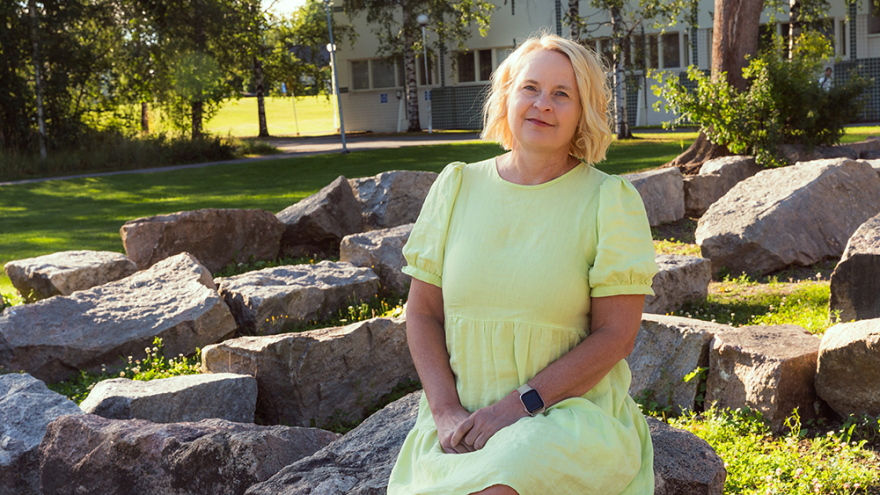
"We study long term consequences of the pandemic and try to map the political measures that were implemented during the COVID pandemic. What forms of crisis management were used, and how were children's rights taken into account? We are then trying to learn from these experiences with a view to future pandemics," she says.
The project is interdisciplinary, with researchers from various disciplines such as sociology, social policy, economics, psychology and history.
“Children are at an age where they are constantly developing physically, emotionally, cognitively and socially, and the disruptions they experienced during the pandemic, in the form of school closures and social isolation, may have contributed to increased stress and affected their development.”
Finnish young people stand out
The project has published its initial findings from a study of Finnish young people's well-being.
"The most important conclusion is that there has been a significant decline in young people's well-being in Finland compared to before the pandemic. Before the pandemic, young people reported higher levels of happiness compared to other age groups. However, in the post-pandemic period, their life satisfaction and happiness have declined more significantly than in other groups, especially among students. So, we can see a decline in well-being and happiness, but on the other hand, young people still express strong optimism about their future compared to other age groups."
Read the entire publication here (in Finnish).
Crisis after crisis
Since the pandemic ended, Russia started a full-scale invasion of Ukraine, and in parallel with this, there are hybrid threats, climate challenges and increase in living costs.
"We are living in a time of multiple crises, and it is difficult to say which consequences can be attributed to the pandemic and which are due to other crises. But as our results show, young people are generally doing well, and it gives me hope that they are positive –even though we are living in the midst of multiple overlapping crises," concludes Mia Hakovirta.
Read more results from ChildrenFirst.
Focus area:
Nordic Research on Children and Young People
ChildrenFirst is part of NordForsk’s research area on children and young people. We have gathered all information about our initiatives concerning children and young people on a dedicated topic page.