Who is conducting research in Greenland, what are they researching, and to what extent is the population involved?
"We have been asked these questions many times since Arctic Hub was established in 2021. There is no central register of research activities in Greenland, and there has been great interest in knowing more. We can now finally provide some answers."
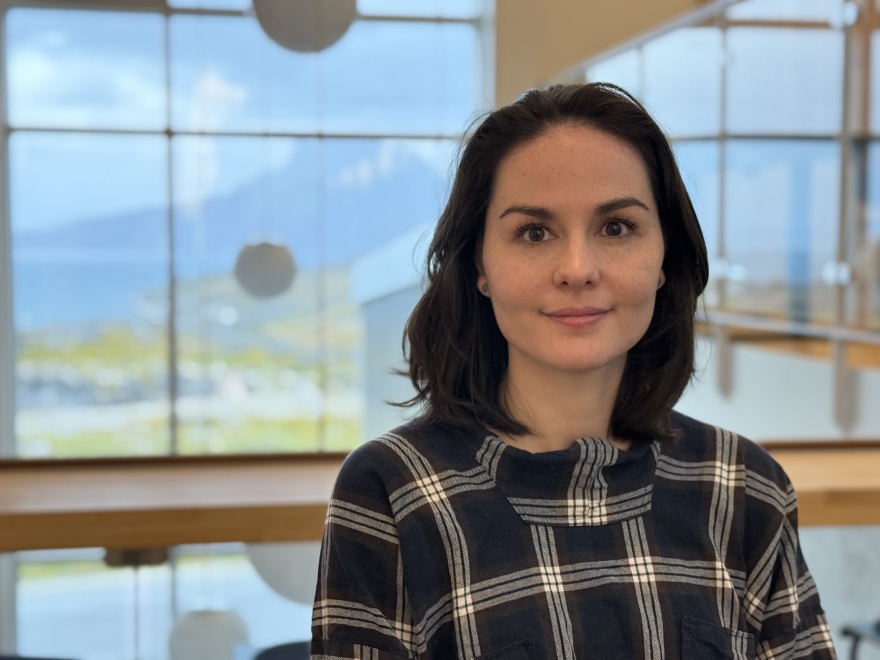
So says Avijâja Rosing-Olsen, head of the secretariat at Arctic Hub.
The recently published report Research in Greenland provides an overview of all research activity from 2015 to 2024. The report is intended to serve as a knowledge base for research policy priorities and has been produced by the Centre for Research Analysis at Aarhus University on behalf of Arctic Hub.
Greenland is a "research laboratory for foreign researchers"
In Greenland, there are six research institutions with approximately 160 researchers affiliated. There are between 5,000 and 6,000 international researchers conducting research in and about Greenland. Greenlandic researchers therefore account for only around five per cent of all researchers.
“Greenland is a research laboratory for foreign researchers. There are many people, particularly climate researchers, who come to Greenland to carry out important research, but how do we ensure that this research benefits Greenlandic society?” asks Avijâja Rosing-Olsen.
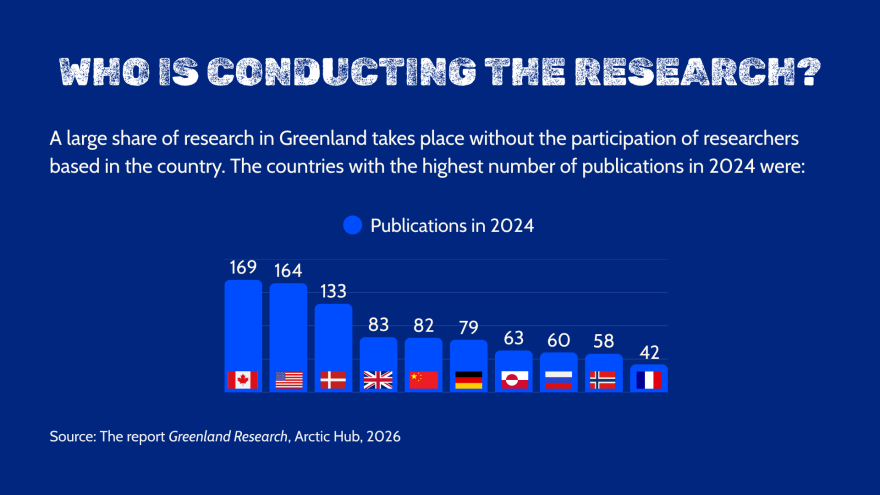
Figures in the report show that the majority of research in Greenland is carried out by Canada, followed by the US, with Denmark in third place. However, from 2022 to 2024, there has been a significant decline in US research in Greenland.
Nordic researchers most frequently collaborate with Greenlandic researchers
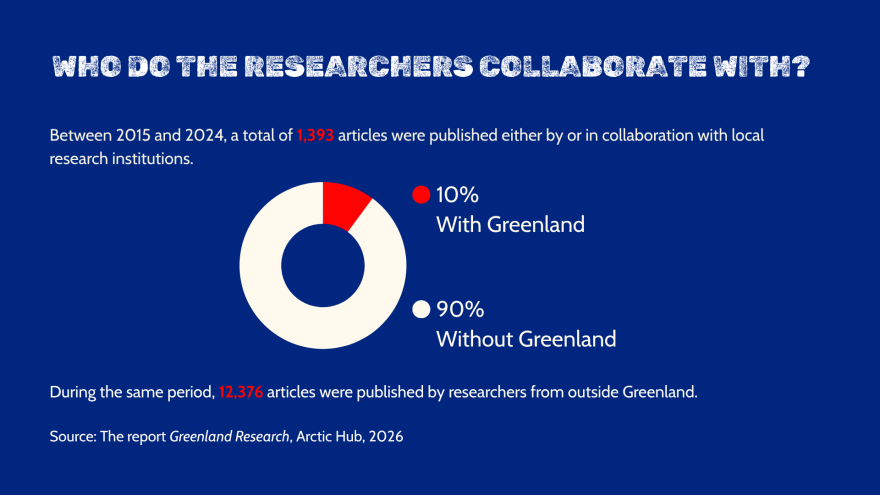
Overall, only 10 per cent of all research involves a Greenlandic partner. Denmark leads the way in terms of collaboration with Greenlandic researchers. In 31 per cent of publications, Denmark has at least one Greenlandic co-author. Next comes Norway, which has a Greenlandic co-author in 18 per cent of publications, and Sweden is third with 16 per cent.
“It is the Nordic countries that most often collaborate with a Greenlandic partner,” concludes Avijâja Rosing-Olsen.
Some residents are tired of foreign researchers coming and asking questions that are all very similar. They feel that they are sharing their knowledge and expertise without getting anything in return. They do not know what the research is used for, which is why people often talk about ‘research fatigue’.
“There is a huge difference between the approach taken by foreign and Greenlandic researchers towards the population. When Greenlandic researchers come here, they receive enormous support because they are people we can relate to. They speak our language, they understand our culture, and there is a very strong willingness to collaborate and contribute.”
Climate takes precedence over people
Of all the topics being researched, natural sciences research is clearly in first place, accounting for 64 per cent. Many of these topics relate to the ice sheet and the impact of climate change. Social sciences research accounts for 16 per cent, and health sciences for 13 per cent.
“It is surprising that climate research takes up so much space, because when we compare ourselves with other countries, we can see that the research landscape here is quite different. Climate-related research is almost all-encompassing, whilst topics relating to public health and living conditions take up far less space. If we compare ourselves with Denmark, which is a natural point of reference for us, we can see that natural sciences account for 30 per cent of all research in Denmark, whilst health research accounts for 36 per cent,” says Avijâja Rosing-Olsen.
It is particularly foreign researchers who focus on climate research, whilst Greenlandic researchers are more concerned with socially relevant topics such as health, politics, sociology and the humanities.
“This report helps us to engage in a meaningful democratic dialogue about research in Greenland and to put research higher on the agenda. We now have a large dataset that reveals certain trends, and we are paving the way for dialogue between Greenlandic research institutions, politicians and the general public,” says Avijâja Rosing-Olsen.
More PhD students in Greenland to build up research capacity
One of those who welcomes the report is Mari Kleist. She is the rector of Ilisimatusarfik, the University of Greenland, and chair of the Research Council of Greenland. She is pleased that an important data foundation has now been established for discussing research policy in Greenland.
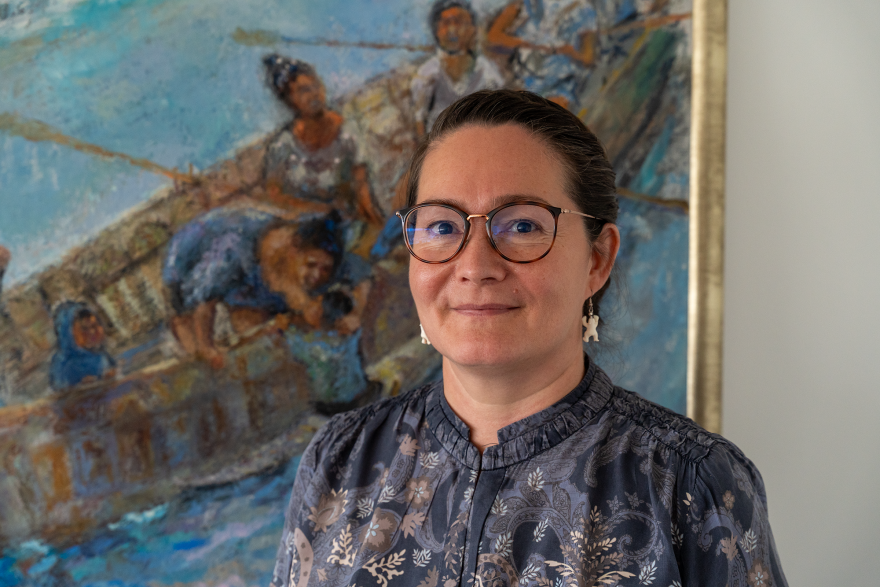
"Research is of enormous importance to Greenlandic society, and this is nothing new. Indigenous peoples have always created and passed on knowledge. We have observed and tried to understand the surroundings we live in, both people, relationships, society, and culture, as well as the landscape, the sea, the weather, the wildlife, and the environment and the changes that are taking place around us. It is also a form of research and systematic building of knowledge,” she says and adds:
“Today, it is important for us to build up the research capacity in Greenland, so that we can develop the knowledge that is important to our society to a greater extent ourselves, and at the same time stand strong in research collaborations both nationally and internationally," she says.
In recent years, a lot has also happened in the field of research, and several developments are underway to build greater capacity. Among other things, more PhD students have arrived:
"We find that for younger PhD students, it has been important to have some role models that they can reflect on. There has been a greater understanding of what the PhD degree means and what doors it can open. This means that many people set bigger goals, have gained greater faith in themselves and want to become PhD students."
International co-operation is crucial
It is also important to have international collaborations with Canada and the Nordic countries in particular.
"Canada and Alaska should have a more important role in our research collaborations, because we are geographically part of the North American continent, and because we as Inuit share origins, kinship and cultural links with Inuit in Canada and Alaska. These are relationships that cut across modern national borders. At the same time, we are also closely linked to the Nordic countries. Many of us have family, cultural, educational and professional relationships with the Nordic countries, and over many years strong collaborations have been built. It is important for us to continue to develop and strengthen these relationships."
"It is therefore not about choosing between North America and the Nordic countries, but about strengthening Greenland's research collaborations in both directions. The Nordic countries are also significantly stronger and will have a greater voice in an international context when Greenland is involved," she says.
Reportages from Greenland
Greenland has about 55,000 inhabitants and is located on the North American continent, but geopolitically, the country is part of Europe. Greenland has self-government within the Kingdom of Denmark.
NordForsk went on a reporting trip to the capital Nuuk.
This is the first article in the series.