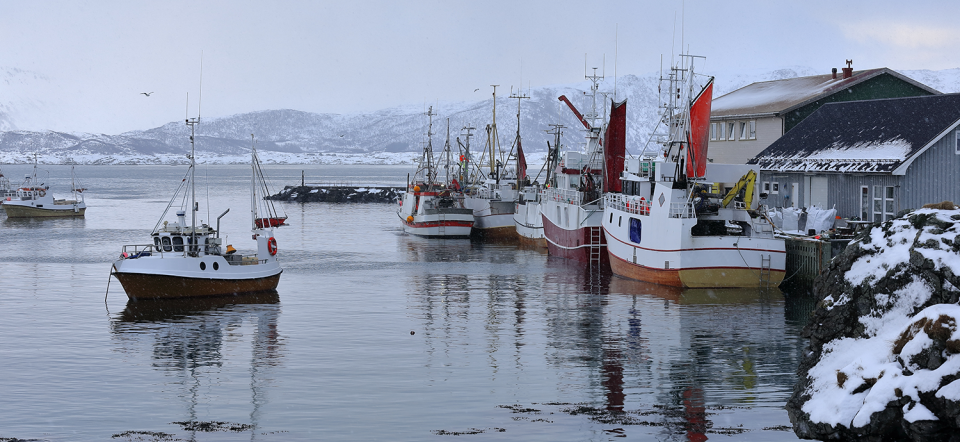
Herring is a fish that most people have tasted and is a staple on the lunch table at Christmas and Easter. There are many herring in both the Baltic Sea and the North Sea, but stocks are affected by both fishing pressure and environmental impacts.
How can we ensure that we can catch herring without overexploiting stocks?
This is being investigated by a Nordic research project led by Nicolas Goñi from the Natural Resources Institute Finland.
The project is part of NordForsk’s focus area on sustainable fishing from healthy seas, initiated by the Nordic Council of Ministers. Fishing is a priority theme in the work to achieve Vision 2030 from the Nordic Council of Ministers.
Fish stocks such as herring are affected both by fishing pressure and environmental impacts, those effects happen together, and it is not always obvious to distinguish them. One possibility for fisheries management to improve the condition of a stock can be to close parts of its area to fishing during certain periods of the year or in certain seasons, which can contribute to rebuilding the stock," says Nicolas Goñi, adding:
"In our project, we will simulate such closures of marine areas and evaluate their impact on herring stocks. How will closures affect the living conditions of fish, and what economic consequences will closures have for the fishing industry? Could there also be unintended side effects of closures, and would they, for example, affect other stocks or other fish species?"
The project involves researchers from the Natural Resources Institute Finland, the Institute of Marine Research in Norway, the Institute of Aquatic Resources in Denmark and the University of Tartu in Estonia.

What characterises herring?
Herring belongs to the category of what we call small pelagic fish that live in the open sea, such as sprat, sardines, mackerel and anchovies. They are very important in the pelagic ecosystem because they transfer biomass and energy from plankton to predators. They are therefore important for seals, birds and, of course, the people who fish them.
"In the Gulf of Bothnia for example, in the 2000s, fishing began to target what we call MSY, the maximum sustainable yield, and this has changed the age structure of herring stocks. We now have fewer, older and large herring, which is an expected result when targeting MSY. Herring can also suffer from overfishing and the effects of climate change or other forms of ecosystem disruption that cause the sudden disappearance of a food source, reducing the herring biomass. The herring biomass of that stock has declined over the past 10 years, and we hope that this will stop at some point," says Nicolas Goñi.
What role can closures play?
The researchers in the project are investigating what spatial and temporal closures, also known as spatiotemporal closures, can mean for herring stocks. They have been used for other fish species such as demersal and coastal fish, but not to any great extent for pelagic fish. Therefore, not much is known about how herring will be affected by any closures and this needs to be addressed.
"The European Union wants to gain more knowledge about which measures can improve the biomass and age structure of herring stocks. In an advice request issued in 2023 by the Directorate-General for Maritime Affairs and Fisheries (DG MARE) under the European Commission, six potential evidence needs were listed, and three of the six concern spatial and/or temporal closures. So, through this project, we are also trying to respond to the requests for advice from (DG MARE)," says Nicolas Goñi.
Read more about the project on their website: Feasibility and effects of spatiotemporal closures on Baltic and Eastern North Sea herring stocks | Natural Resources Institute Finland