
In recent years, “hybrid” has become a recurring term in discussions about modern working life. People talk and write about hybrid work, hybrid offices, and the hybrid working life. In the project Sustainable and Inclusive Hybrid Workplaces – anywhere and anytime? (SIHW), hybrid work is defined as work you can choose to do at home, in the office, or elsewhere – in other words, work where you decide the location yourself.
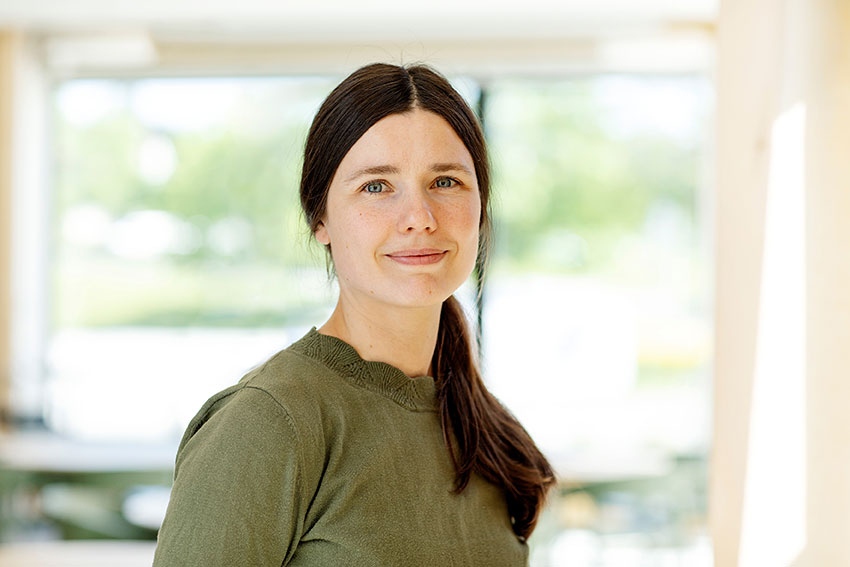
Marianne Skaar, a researcher at SINTEF Community, collaborates with colleagues from Iceland, Norway, and Sweden to find answers to how hybrid working arrangements affect working life, health, well-being, inclusion, and sustainability. The goal is to develop knowledge and methods that ensure hybrid workplaces contribute to green transition, social sustainability, and a good working environment in line with the Nordic work model, which is characterised by high levels of trust, employee participation, and a good balance between work and leisure.
The Nordic model is central to Skaar’s work. She leads a sub-project examining how the Nordic work model influences and is influenced by hybrid workplaces. This is done through group interviews in three organisations about how they manage hybrid working life.
“It quickly became clear to us that one organisation was particularly relevant for the project. It was a municipal workplace that, right after the pandemic, moved into new premises with so-called activity-based workplaces throughout the building. For us, it is especially interesting to see how they handle this double flexibility, where employees can choose whether to work at the office or at home, while also having a choice of desk,” says Skaar.
Many individual choices
She explains that this creates a work situation involving many individual decisions:
“The concept of an activity-based office means that each employee moves around and finds a desk suited to the task at hand. Then you have hybrid working life, which makes it an individual choice whether to work from home or at the office. On top of that, you have trust-based leadership, which gives a lot of autonomy and independent decision-making. Not only does this result in many individual choices for employees, but collectively it requires extra resources to coordinate internally within the organisation.”
Skaar says organisations use different strategies to manage this flexibility:
“Some strategies are at the individual or group level, such as agreeing with colleagues or teams on which days to work where. Some prefer to work from home at the same time as their closest colleagues. When they come to the office, they try to find desks next to each other. Then there are leadership strategies, such as having fixed days when everyone is expected to be present. They might schedule departmental meetings on certain days and make it clear that employees should come to the office then. That’s fine, but then comes the challenge of finding each other in the building. Some managers solve this by informally agreeing with other groups to use an area where there is enough space for everyone on a specific day, precisely to ensure colleagues can sit together.”
Hybrid formalism?
Hybrid working life suits some people well, but not everyone – and for good reason, according to Skaar.
“In a municipality, there are many different tasks and ways of working. So when everyone has to follow the same office design principle, it works very well for some, while others struggle to find their closest colleagues. What we see is that the actual tasks get done – that’s not the problem. But then there’s the issue of colleagues and the sense of having a good work environment. That’s where problems arise.”
“An interesting finding is that those we spoke to feel very productive working from home because they can shield themselves and concentrate. People often save tasks like writing reports or other texts for home.”
The issue of location is not just about efficiency but also learning. The informal communication that happens when colleagues are physically present in the office leads to what researchers call “communicative practice.” You can learn a lot simply by being near colleagues and overhearing conversations, for example, when they discuss problem-solving or talk about ongoing projects.
“Another dimension is that in hybrid working life, things become more formal. A lot of communication happens via email, and people are much quicker to schedule Teams meetings for clarifications. These are likely the kinds of clarifications that used to happen during breaks, in corridors, or by popping into an office,” says Skaar.
“You pick up an incredible amount about what’s going on in the organisation when you’re present. Clearly, this is something that can be lost in hybrid working life.”
A difficult balance
Despite many findings, Skaar is cautious about giving general recommendations for hybrid working life. “My impression is that the use of home offices should ideally be strategic and adapted to teams and tasks, not the entire organisation as one unit. Coordination is undoubtedly important to maintain both learning and the informal knowledge sharing that happens when people are physically present. We see that free desk choice can work, but it should probably be practised at smaller scales to preserve a sense of belonging. Ultimately, there is no one-size-fits-all solution, so you have to balance individual needs with organisational goals.”