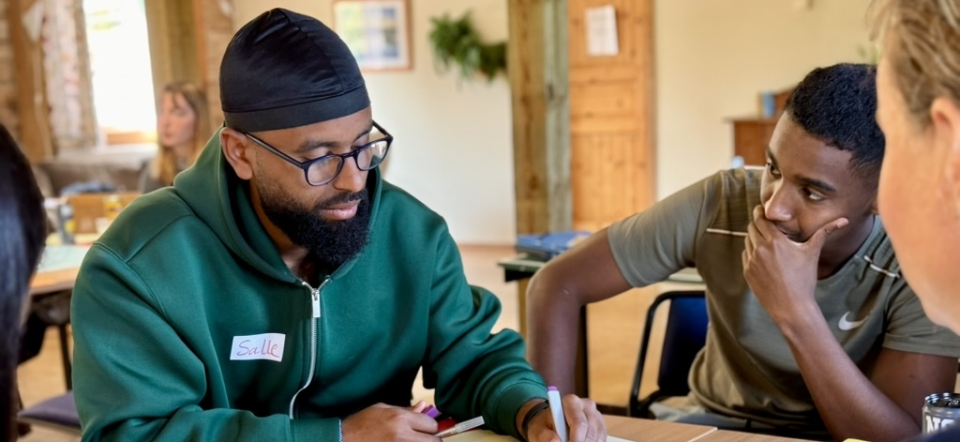
What happens when people do things together that give them hope? The Nordic-Baltic initiative for migration and integration research encouraged researchers to challenge myths and stereotypes about integration. This inspired a group of researchers from Oslo Metropolitan University, Malmö University and University College Copenhagen to explore hope among youth from superdiverse neighbourhoods, aged 15 to 25.
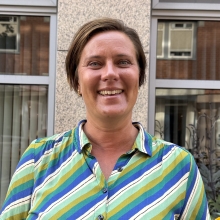
“Earlier research on hope is often focused on the individual and comes from psychology. We wanted to understand hope as something people create together in everyday life, and here there is a research gap. Rather than studying integration directly, we are looking at how young people who grow up in super-diverse neighbourhoods and under complex conditions navigate and understand hope,” says Aina Landsverk Hagen, researcher at the Work Research Institute, Oslo Metropolitan University and project leader of Practicing Hope: Challenging myths and changing narratives of youth in super-diverse urban communities (YouHope)
Young people as co-researchers
The YouHope project uses and develops peer research, a co-research method that involves recruiting a number of people from the group being studied to become part of the research team.
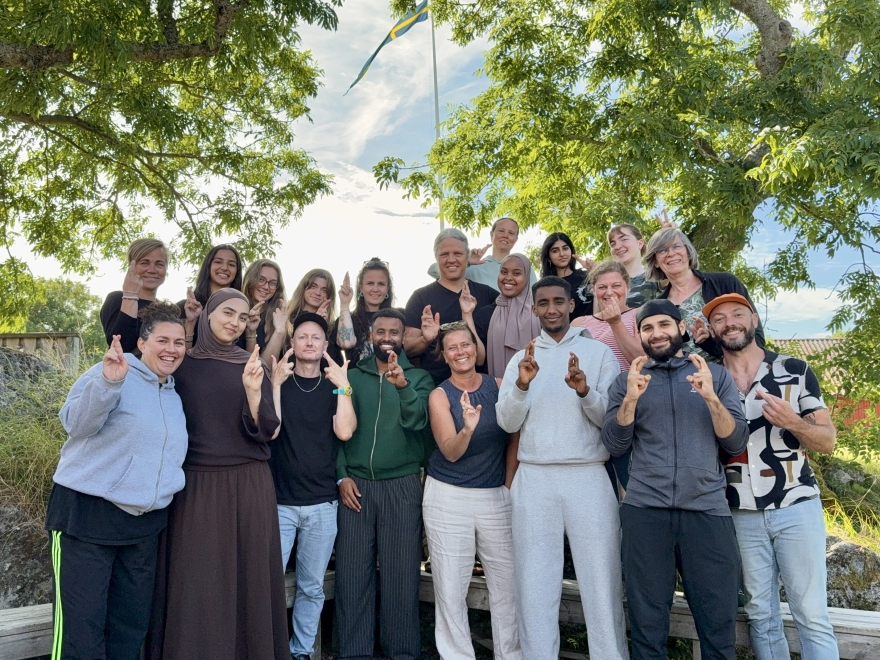
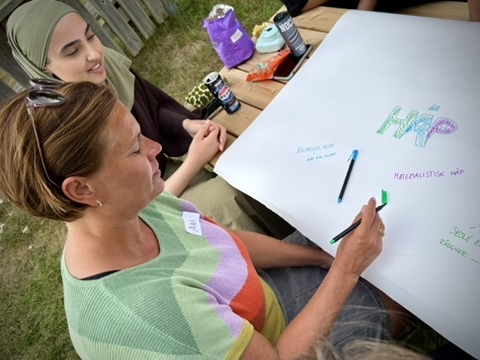
“We have recruited four young co-researchers and have recently completed a summer camp where they discussed which issues are important to them, including research ethics and were trained in interviewing techniques and participant observation,” says Hagen.
“It was a valuable learning experience for both them and us as established researchers. We had to adjust the research plan after listening to the young people’s experiences and perspectives on how we should carry out research on their peers,” she continues.
The project will now conduct field studies over the course of a year in the city districts Gamle Oslo and Søndre Nordstrand in Oslo, Möllevången and Hermodsdal in Malmö, and Valby in Copenhagen.
“We are using a snowball method, starting with the network our co-researchers have in these neighbourhoods and then seeing where that leads us. The aim is to conduct 50 interviews in each country and do participant observation among youth. We hope that our ethnographic data can challenge the stigmatised public debate about youth from minority and migrant backgrounds in these neighbourhoods.”
Youth voices are heard to varying degrees in the media in the Nordic countries
The project has analysed how the media in the three Nordic countries portray youth in relation to hope, dreams and visions, as well as how young people’s voices are presented in interviews and quotes.
The analysis shows that young people with minority and migrant backgrounds are often portrayed in the media as role models or entrepreneurs. The stories are about young people who help others and give back to their neighbourhoods in different ways, or who create something new, according to Hagen.
“Our material from Oslo consisted solely of instances where young people were quoted. We discovered that the Norwegian media largely give young people a voice, particularly on cultural issues. In Malmö, the material often centred on art and creativity. In Copenhagen, we also included material in which adults talk about young people, as there wasn’t much where young people were quoted directly. When young people are quoted, it is usually about diversity in schools and education”, she says.
Hope as a double-edged concept
The analysis results show three main categories of subjects where young people from these neighbourhoods are heard in the media. The first is education and employment as a path to stability and independence.
“For many young people with minority backgrounds, it is about proving their worth and achieving a sense of belonging. At the same time, however, this is often tied to performance pressure, the desire to live up to expectations, and the fear of making the wrong choices in life,” says Hagen.
The two other categories where young people’s voices are heard in the media are criminality and prevention, as well as diversity and discrimination. While young people often talk about prevention and the social relations that help people out of criminality or stop them from ending up there, the public debate is mostly about surveillance and sanctions.
“The young people talk about diversity as something hopeful, which provides opportunities, for example being able to navigate multiple languages and countries. But they also share that they experience discrimination. What we see overall is that hope is tied to a sort of doubleness. Hope is activated when people encounter boundaries and are confronted with things in society that are not as they wish them to be,” says Hagen.
Challenge stereotypes and myths
The results of the YouHope project will be presented as short films and a science exhibition at the projects closing conference, which they call, Nordic Youth Summit in Malmö in autumn 2027. The event will be a policy lab where Nordic youth and policymakers can meet and discuss.
“Our goal is to contribute to societal change by challenging stereotypes about young people with immigrant and minority backgrounds. The young people who are our co-researchers care about their neighbourhoods, friends and families. They want these areas to become better places to grow up in. It is very rewarding to work with young people who are so locally engaged and have big visions. We want to make sure that they are not only invited into the public debate but also have a leading position in discussions about themselves and a greater role in research as agenda-setters, not just knowledge providers,” says Aina Landsverk Hagen.