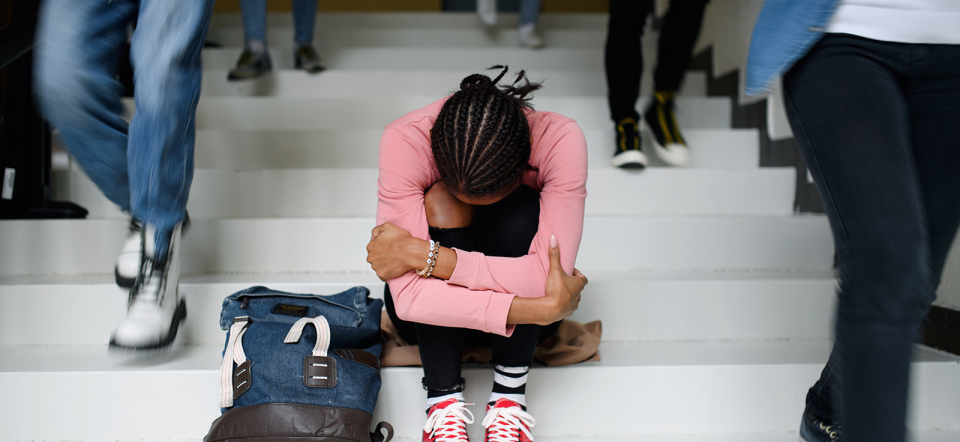
A good schooling is crucial for children and young people also later in life. But it is not a matter of course that school is a positive experience for everyone.
"We know that more children and young people are being diagnosed with mental health problems and there is increasing concern in society about young people's well-being. How this affects schooling is a socially and scientifically important question, because we do not yet know enough about the interaction between mental well-being and educational results. This is an area that has been researched very little so far."
This is according to Elina Kilpi-Jakonen, who is a professor of sociology at the University of Turku. She is leading the research project Young First, which addresses a crucial knowledge gap in Nordic research, namely how young people's mental health and education affect each other over time and across national borders.

Education is a stepping stone to entering the labour market
A good schooling is not only important in childhood and adolescence. Education is in many cases a stepping stone to entering working life.
"In the Nordic societies we live in, there are fewer and fewer jobs that can be done without having completed an education. Therefore, it is important that we support young people in completing their schooling and also in completing an education so that they enter the labour market later in life."
Two projects must find synergies
The research project brings together researchers from the two previous NordForsk-funded children and young people's projects ChildrenFirst and YoungEqual and has participants from Finland, Iceland and Denmark.
In Young First, the researchers have a long-term view of young people's well-being and educational achievements, and they will investigate whether they can see a change in how the two are connected over time, now that more young people are receiving mental health diagnoses. They will also investigate whether there are potential social differences, for example whether parents' level of education, gender, or migration background affects young people's diagnoses and schooling.
The researchers use both register data and data from questionnaires.
"In order to be able to conduct this type of research across the Nordic countries, it is important and almost a prerequisite to collaborate in the Nordic countries. In addition to producing harmonized results, it is also valuable for us to share experience and perspectives. Even though we are quite similar in the Nordic countries, there are also differences, which is a strength in a research perspective," says Elina Kilpi-Jakonen.
Read more about ChildrenFirst: Young people are generally optimistic about the future