There are nine Sámi language varieties spoken today. The Network to Support Research and Teaching of Small Saami Languages (SAMLA) works to support research and teaching in four of the smaller Sámi languages: South Sámi, Lule Sámi, Skolt Sámi and Inari Sámi.
South Sámi and Lule Sámi are spoken across Norway and Sweden, while Inari Sámi is spoken mainly in Finland. Skolt Sámi is also spoken in Finland and previously also in parts of Russia. There are only a few hundred users of each of these languages.
“What these four languages have in common is that they are all classified as critically endangered by UNESCO. One reason we wanted to focus on the smaller Sámi languages in our network is that they face challenges that somewhat differ from those of, for example, North Sámi, which is the only Sámi language classified as endangered rather than critically endangered. There are areas where North Sámi is the majority language, but there is really nowhere where the smaller Sámi languages are in the majority. You could say that they are a minority within a minority,” says Associate Professor Ingvill Bjørnstad Åberg.
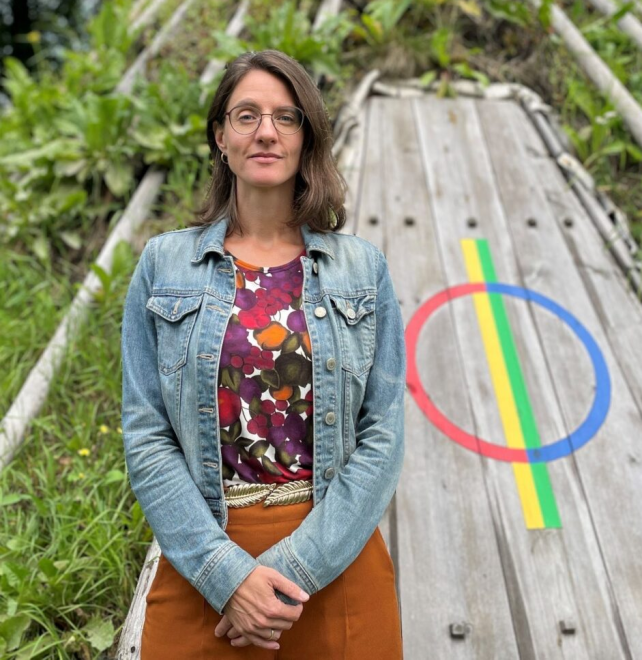
She is the project leader of SAMLA and works with teacher education at Nord University in Norway. SAMLA also includes researchers from the University of Oulu in Finland and Mid Sweden University. The aim of the network is to promote collaboration between language teachers, students, researchers and policymakers.
Supporting language teachers and teacher education
The main challenge facing the smaller Sámi languages is the lack of teachers and of people training to become teachers in these languages. That is why the network focuses particularly on supporting language teachers and teacher education.
“The few teachers who do exist are often alone at their school, without any collegial network around them. For example, in Sweden it might be the same South Sámi teacher who travels around big parts of the South Sámi area to provide teaching. That means spending most of their working time driving long distances between schools. We want to offer an arena where teachers can share experiences with teachers of the other smaller Sámi languages who may be in a similar situation,” Bjørnstad Åberg says.
At Nord University, there are teacher education programmes in Lule Sámi and South Sámi, with a total of five new students the past year. At the same time as there is an acute shortage of teachers in the smaller Sámi languages, the researchers are seeing growing interest in learning these languages.
“I am most familiar with the Norwegian context, and there the interest to learning both South Sámi and Lule Sámi is increasing. This year we got as many as 26 applications to bachelor studies in Lule Sámi at the Nord University. It is at a point where people are actively being recruited to teacher education programmes to meet the demand,” says Bjørnstad Åberg.
SAMLA aims to strengthen language teacher education, among other things by promoting co-operation between countries.
“These language communities extend across national borders and should not be viewed in isolation. It is the same language, and to a large extent the same needs, for South Sámi in both Norway and Sweden, for example. But we see some institutional barriers that make it difficult for someone in Sweden to be admitted to a language teacher programme in Norway, since application and admission systems are not designed to work across national borders. We want to create a forum where we can discuss these kinds of challenges and potential solutions,” says Bjørnstad Åberg.
Need for literature in the smaller Sámi languages
In addition to promoting language teacher education, Ingvill Bjørnstad Åberg highlights the translation of children’s literature as an important priority for revitalising the smaller Sámi languages.
“There are only very few people working with the translation of literature into these languages, so efforts to ensure access to translated literature are rather precarious. Access to literature in Sámi is one of the most important factors in enabling that the languages is used in everyday life, and not only in school,” she says.
To support teachers and teacher students in the smaller Sámi languages, the network plans to organise several meetings, including one with the institutional leadership at the three universities involved in the network, and another with local politicians responsible for education policy in the affected regions.
“We want to challenge the leadership at our universities to reflect on what their responsibility is when it comes to creating space for these smaller languages within their own institutions. Nord University has what is known as a national responsibility for South Sámi and Lule Sámi in higher education in Norway, and we want to initiate a discussion about what that responsibility could mean in terms of concrete action. With the politicians, we will discuss what policy measures Sámi teachers need as support in their work,” says Bjørnstad Åberg.
Read more about the Network to Support Research and Teaching of Small Saami Languages (SAMLA).