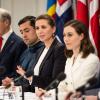
During the pandemic, the Nordic crisis management principle of sector responsibility was put to the test. But what was behind the challenge to the sector responsibility principle? A Nordic research project will try to answer.
According to the World Health Organization, air pollution is the world’s largest single environmental health risk. Each year approximately 10 000 people in the Nordic region die prematurely as a result of air pollution exposure, but the question of which pollutants are the most detrimental to health has yet to be resolved. Professor Jørgen Brandt and other participants in the NordForsk project NordicWelfAir are hunting for the answer.
Neither digital technologies, software, nor procurement processes connected to the digitalisation of the police and law enforcement are neutral or technocratic. They are deeply politicised and embed different kinds of notions about the future and political choices, researchers claim.
Professor Allan Krasnik fears enormous economic and social problems for the Nordic society if the integration of refugees and migrants is not successful. “The Nordic welfare model is based on equality and solidarity, and there is an impending risk of rising inequality and conflict in society if refugees receive inferior services,” claims Professor Krasnik.
During the pandemic, the authorities introduced support programmes for companies to avoid laying off employees. Some called it a sleeping pillow, others a necessary measure. Now research shows that the subsidies may have helped the Nordic countries avoid an economic downturn.